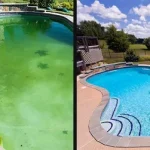

You test your pool water, expecting balance and instead, the numbers push back. You adjust the pH, and suddenly the alkalinity is off. Fix that, and now the chlorine isn’t working the way it should. It feels like a loop you can’t quite escape.
If you’ve ever stood poolside wondering why clear water is so hard to maintain, the answer often comes down to one quiet but powerful factor: alkalinity.
What Is Pool Alkalinity (And Why It Matters)?
Alkalinity is your pool water’s ability to resist sudden pH changes it acts as a buffer. When alkalinity is stable, your pH stays steady. When it’s not, your pH can swing unpredictably.
In simple terms:
Alkalinity stabilizes pH, and pH helps your sanitizer (like chlorine) work effectively.
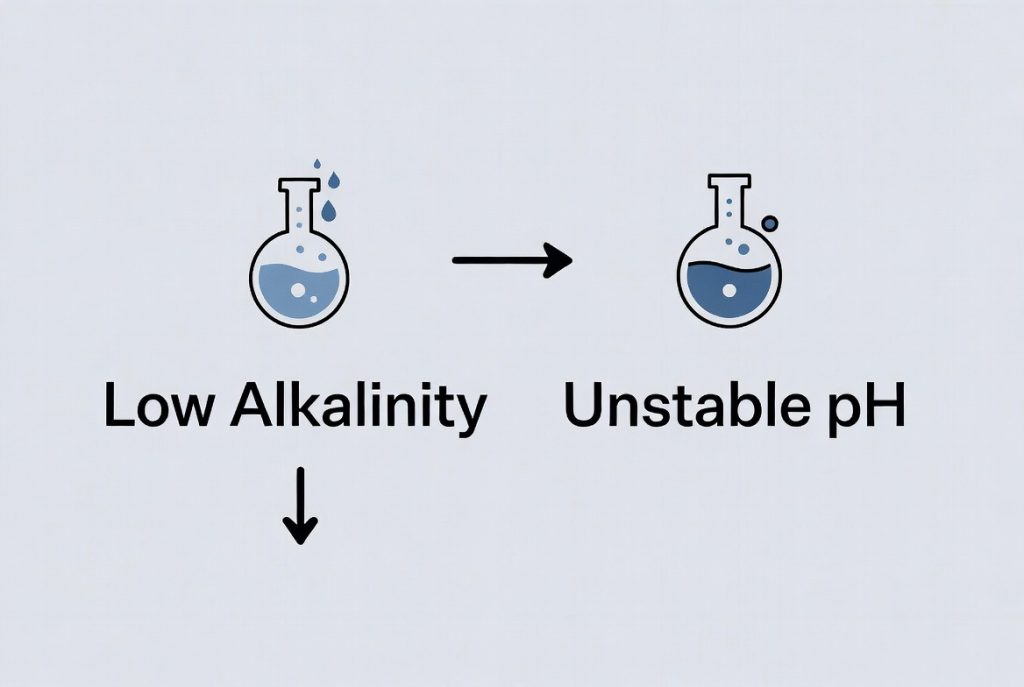
The ideal range for total alkalinity is typically 80–120 ppm. If it drops below that, your water becomes unstable—and everything else becomes harder to manage.
Key Takeaways
- Low alkalinity leads to unstable pH and ineffective chlorine
- Baking soda (sodium bicarbonate) is the simplest way to raise alkalinity
- Always adjust alkalinity before adjusting pH
- Test water regularly to prevent a cycle of imbalance
Why Low Alkalinity Becomes a Bigger Problem Than You Expect
You’ve probably felt this: the water looks fine one day, then suddenly turns cloudy, irritates your eyes, or starts damaging equipment.
Low alkalinity is often the hidden cause.
When alkalinity drops:
- pH fluctuates rapidly
- Pool surfaces and equipment can corrode
- Water becomes uncomfortable for swimmers
- Chlorine loses efficiency
It’s not just about numbers it’s about control. Without alkalinity, you’re constantly reacting instead of maintaining.
How to Increase Alkalinity in a Swimming Pool (Step-by-Step)
If your alkalinity is low, the fix is straightforward but the order matters.
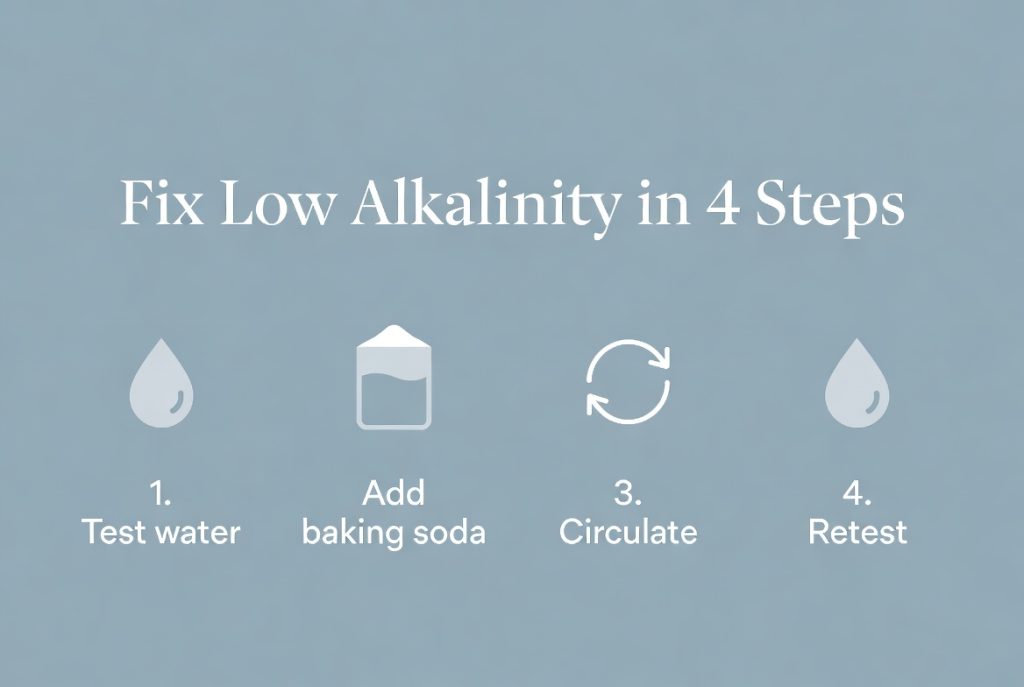
A Simple 4-Step Process:
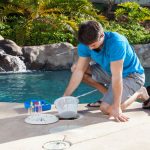
- Test Your Water
Use a reliable pool test kit to confirm alkalinity levels. - Add Baking Soda (Alkalinity Increaser)
The active ingredient is sodium bicarbonate. It raises alkalinity with minimal impact on pH. - Run Your Pump and Filter
Let the water circulate for at least 20 minutes to distribute the chemical evenly. - Retest Before Adjusting Anything Else
Only after alkalinity is stable should you adjust pH or chlorine levels.
This sequence prevents the “domino effect” where fixing one issue creates another.
A Practical Framework: The “Balance First” Method
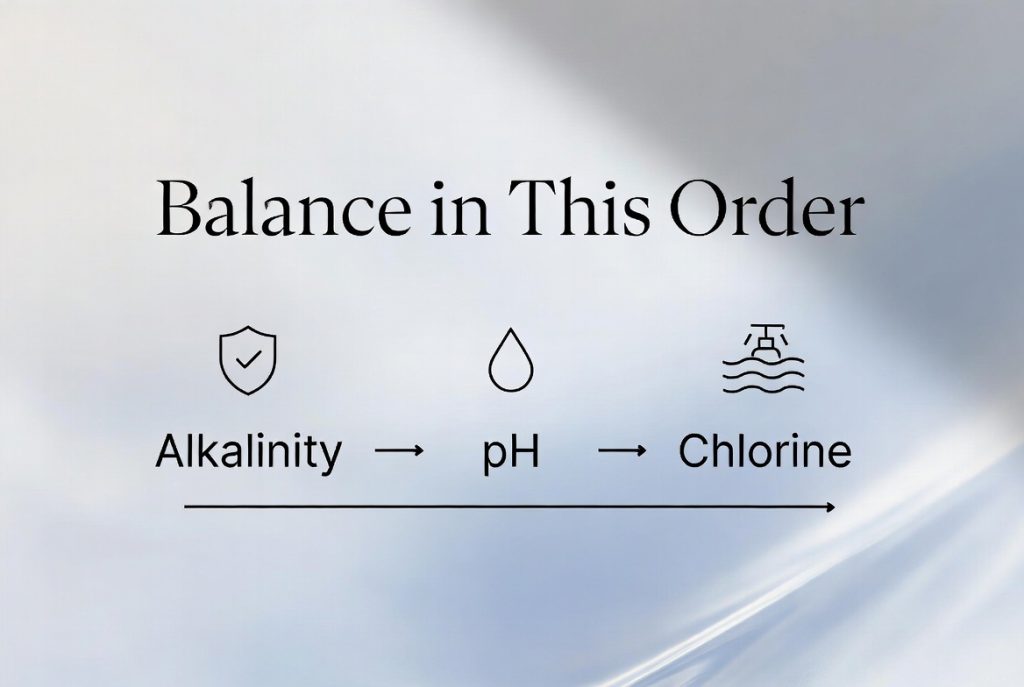
Think of pool chemistry as a simple hierarchy:
- Alkalinity (foundation)
- pH (stability)
- Chlorine (sanitation)
If you skip the first step, everything else becomes inconsistent.
As Benjamin Franklin once said: “An ounce of prevention is worth a pound of cure.”
In pool care, balanced alkalinity is that ounce of prevention.
Common Pool Situations (And What to Do)
| Situation | What’s Happening | What You Should Do | Common Mistake |
|---|---|---|---|
| Low alkalinity + low pH | Water is unstable and acidic | Add alkalinity increaser first | Fixing pH first |
| Low alkalinity + normal pH | pH may swing soon | Raise alkalinity only | Ignoring it because pH looks fine |
| Low alkalinity + high pH | Imbalance in buffering | Lower pH, then raise alkalinity | Adding chemicals all at once |
| Frequent imbalance | External factors affecting water | Test weekly and adjust gradually | Overcorrecting |
What Most Pool Owners Get Wrong
❌ Do This:
- Add multiple chemicals at once
- Guess amounts instead of testing
- Adjust pH before alkalinity
✅ Not That:
- Add one chemical at a time
- Retest after each adjustment
- Always correct alkalinity first
Small, measured changes are far more effective than big, reactive ones.
Why Your Alkalinity Keeps Dropping
Even if you fix it once, it can drift again. That’s normal.
Common causes include:
- Rainwater diluting your pool
- Debris and dirt entering the water
- Heavy pool usage
- Certain chlorine products lowering pH
- Water features or aeration affecting balance
The key is consistency—not perfection.
A Real-World Scenario You Might Recognize
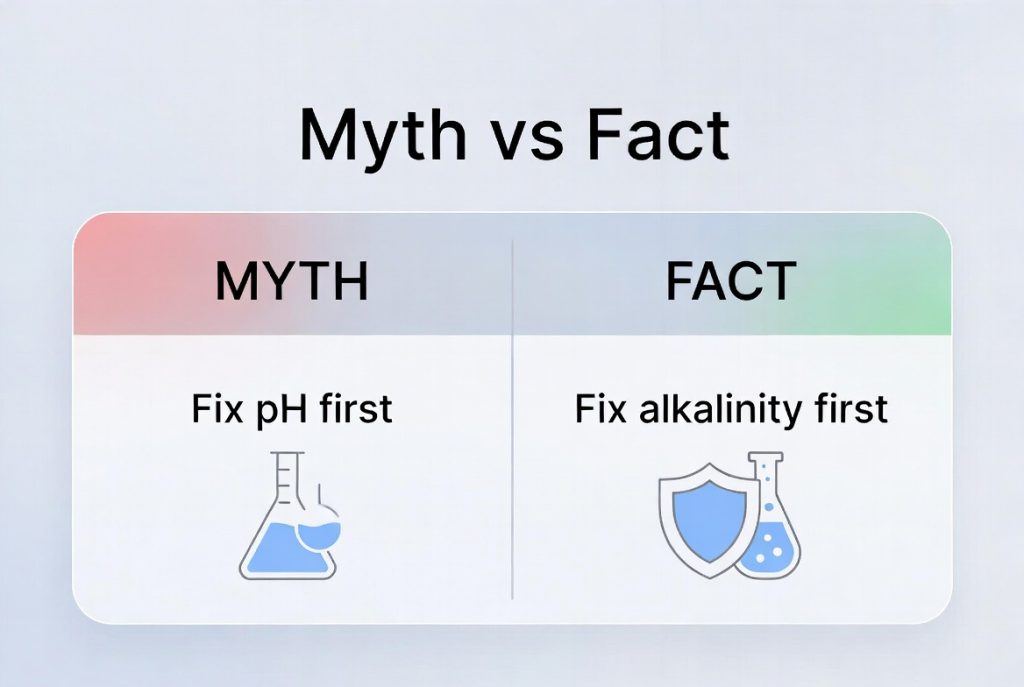
You test your pool and notice the pH is low, so you add a pH increaser. It improves briefly, but a few days later, the pH drops again.
What’s happening?
The underlying issue—low alkalinity—was never fixed. So the pH keeps bouncing back out of range.
Once you raise alkalinity first, the pH stabilizes naturally. Suddenly, everything becomes easier to manage.
How Often Should You Check Alkalinity?
A good rule: test your pool water at least once a week.
If your pool sees heavy use or recent weather changes, check it more often. Preventing imbalance is always easier than correcting it.
Conclusion: Stability Changes Everything
Learning how to increase alkalinity in a swimming pool isn’t just about adding baking soda it’s about understanding how your water behaves.
When alkalinity is in range, your pool becomes predictable.
Your pH stabilizes.
Your chlorine works better.
And maintenance feels less like a guessing game.
If you want reliable, stress-free pool care, start with alkalinity and let everything else fall into place.
Audio Summary (Separate Voice Version)
If your pool water feels impossible to balance, alkalinity is usually the missing piece. It acts as a buffer that keeps your pH stable and your chlorine effective. Start by testing your water, then raise alkalinity using baking soda, and always adjust it before touching pH. With consistent testing and small adjustments, your pool becomes much easier to manage.
FAQs
What makes a good pool alkalinity level?
A good alkalinity level falls between 80 and 120 ppm, which keeps pH stable and water comfortable.
What are the best practices for maintaining alkalinity?
Test weekly, adjust slowly, and always fix alkalinity before pH.
How to increase alkalinity without affecting pH too much?
Use baking soda, which raises alkalinity with minimal impact on pH compared to other chemicals.
When to hire professional help for pool chemistry?
If your water stays unbalanced despite regular adjustments, a professional can identify deeper issues.
What services help maintain pool water balance?
Regular pool maintenance services include testing, chemical balancing, and equipment checks.
Can SO help with pool water balance issues?
Yes, SO provides expert support to diagnose and maintain proper pool chemistry for long-term stability.
Does SO offer customized pool care solutions?
SO can tailor maintenance plans based on your pool size, usage, and environmental conditions.
What is the cost of fixing low alkalinity?
Costs are generally low since baking soda is affordable, but ongoing maintenance ensures you avoid bigger repairs.
What are the top mistakes in pool chemical balancing?
Adding multiple chemicals at once and ignoring alkalinity are the most common errors.