
A Practical, No-Stress Guide to Keeping Your Pool Clear All Season
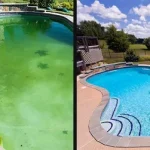
Picture this: it’s a Saturday afternoon in late June. The kids have been begging all week. You walk out to the backyard, pull back the cover, and the water is green. Not a little murky. Green. And you have no idea what happened because you thought you were doing everything right.
If that scene sounds familiar, you’re not alone. Above ground pool maintenance trips up a lot of people not because it’s truly hard, but because no one ever explained the order of things, the right products, or the small habits that prevent big problems. Once you understand those, keeping your pool clear becomes almost automatic.
Here’s the good news: maintaining an above ground pool is far simpler than it looks. It comes down to about five consistent habits and the right set of affordable tools.
Key Takeaways
- Test your water weekly with strips, and do a full chemical test monthly.
- Always skim before you brush — not after — to avoid stirring up debris.
- Use 1-inch trichlor tabs in a floating dispenser sized right for your pool.
- Never store two different types of chlorine together — ever.
Why Above Ground Pool Care Gets Overcomplicated
Most pool owners fall into one of two traps: they either do too much (dumping in chemicals randomly and hoping for the best) or too little (ignoring the water until something goes visibly wrong). Neither approach works.
The real secret to an easy maintenance routine is timing and sequence. You don’t need a chemistry degree. You need a checklist you can actually stick to.
What Does a Basic Above Ground Pool Maintenance Routine Look Like?
A well-maintained above ground pool follows a simple weekly rhythm: test the water, skim the surface, brush the walls and floor, let the filter do its job. Repeat. That’s genuinely it for most weeks.
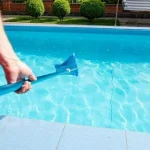
The tools that make this easy aren’t expensive. A 4-to-8-foot telescoping pole with a net attachment, an 18-inch nylon brush, and a floating chlorine tab dispenser sized for your pool are your core kit. Note: for smaller above ground pools, 1-inch trichlor tabs in a smaller floating dispenser are far more appropriate than the oversized 3-inch tablet floaters designed for full-sized in-ground pools. Using the wrong size means you either under-chlorinate or spend the whole season fighting with a half-closed floater.
Understanding Your Chemicals (Without the Overwhelm)
The chemistry side of pool care sounds intimidating — but for an above ground pool, it really boils down to three things: chlorine, pH, and stabilizer.
Chlorine keeps the water sanitized. For above ground pools, 1-inch trichlor tabs in a floating dispenser work well for ongoing maintenance. Trichlor naturally lowers pH slightly and adds cyanuric acid (stabilizer) to the water — roughly 6 parts per million of stabilizer for every 10 ppm of chlorine it provides. Your target chlorine range is 2 to 4 parts per million.
pH should sit between 7.4 and 7.6. If it drifts too high, your chlorine becomes far less effective — even if levels look fine on a test strip.
Stabilizer (cyanuric acid) is what protects your chlorine from being burned off quickly by sunlight. When starting up a fresh pool with zero stabilizer, many professionals use dichlor (sodium dichloro) temporarily because it’s nearly pH-neutral and adds stabilizer rapidly — about 9 ppm of stabilizer per 10 ppm of chlorine — making it ideal for getting those initial levels established before switching to a regular trichlor tab routine.
One important rule when adding granular chlorine to a vinyl-liner pool: always pre-dissolve it in a bucket of water first. Concentrated chlorine granules sitting directly on your vinyl liner will bleach and permanently damage the pattern. A clean bucket, some water, a good stir — then pour it into the running pool.
The Pool Care Cheat Sheet: At a Glance
| Task | How Often | Why It Matters | Common Mistake |
| Water test (strips) | Weekly | Catch imbalances early | Storing strips in a hot or humid spot — they give false readings |
| Full water test (kit or pool shop) | Monthly | Verify strip accuracy and catch calcium/alkalinity drift | Skipping this and relying on strips alone |
| Skim surface debris | Weekly | Prevents clogging and chlorine consumption | Brushing first — then debris gets suspended and harder to remove |
| Brush walls and floor | Weekly | Disrupts algae before it takes hold | Using steel or combo brushes on vinyl — nylon only |
| Clean skimmer basket | Weekly | Keeps water flowing through the filter | Waiting until it’s completely clogged before emptying |
| Add algaecide | As needed/startup | Inhibits algae growth; some formulas also deter wasps | Using too much foam-producing algaecide in a small pool |
Skim First, Brush Second — and Here’s Why
This is one of those small details that makes a noticeable difference. If you brush the walls and floor first, you kick up all the settled debris — leaves, dust, fine particles — and suspend them in the water. Then when you try to skim, you’re chasing a cloud.
Do it the other way: skim first to remove the surface and settled debris, then brush. Brushing loosens anything starting to cling to the surface — early algae, film, fine particles — and your filter picks it up as the water circulates. The brush also gets into floor creases and wrinkles where stagnant spots can form. Think of it the same way you think of brushing your teeth: once a week, consistently, prevents problems that are much harder to fix later.
Use a nylon brush only on vinyl liners. No steel, no combination brushes. Steel bristles will damage your liner.
What Most People Get Wrong (Do This, Not That)
Do use expandable rubber plugs when servicing your filter or pump basket. Because above ground pool equipment sits below the water line, opening the system without plugging the skimmer and return lines is like pulling the bath plug — water flows back fast. Plug those lines first, service your equipment, remove plugs before restarting. (And yes, write yourself a reminder to remove the plugs — it’s an easy one to forget.)
Don’t store two different types of chlorine together. Trichlor and dichlor, or trichlor and calcium hypochlorite — these combinations can react dangerously. Each type stays in its own sealed container, stored separately, in a cool and stable location. Not in the back of a hot car.
Do keep your test strips somewhere cool and dry — like a kitchen drawer — not in a hot garage or shed. Heat and humidity degrade strips quickly and produce inaccurate readings.
Don’t add chemicals and immediately let swimmers in. Add your chemicals while the pump is running, wait a couple of hours, retest — then it’s swim time.
A Familiar Scenario Most Pool Owners Will Recognize
You open the pool after a two-week vacation. The water has a slight green tint. You test it and find zero chlorine, pH above 7.8, and stabilizer levels near zero. This is the classic new-or-neglected pool scenario.
The fix isn’t complicated: establish your stabilizer first using dichlor (pre-dissolved in a bucket of water) to get cyanuric acid levels into the 30–50 ppm range. Set up your chlorine floater with 1-inch trichlor tabs. The tabs will gradually nudge pH down from that 7.8 as they work. Test again in a couple of hours. Brush the walls. Skim anything floating. Within 24–48 hours, you’ll be looking at clear water again.
According to the U.S. Consumer Product Safety Commission, maintaining proper chlorine and pH levels is among the most important steps to keeping pool water both safe and healthy for swimmers.
“The difference between something hard and something easy is usually just knowing the right order.” — Anonymous, but true of almost every maintenance task ever.
Conclusion: Consistent Beats Perfect
Above ground pool care isn’t about being a chemist. It’s about showing up weekly, doing five simple things in the right order, and catching small imbalances before they become green-water situations. The tools are affordable, the routine is short, and once it clicks — it really does become second nature.
A pool that’s properly maintained costs far less in chemicals and repairs than one that’s allowed to swing out of balance regularly. Small, consistent effort is always the better path.
Audio Summary (Separate Voice Version)
Maintaining an above ground pool comes down to five consistent habits: test your water weekly, skim before you brush, brush the walls and floor with a nylon brush, keep your chlorine floater loaded with the right size tabs, and clean your skimmer basket regularly. Use the right type of chlorine for the job — trichlor tabs for daily maintenance, dichlor to quickly establish stabilizer levels at startup — and always pre-dissolve granular chlorine in a bucket before adding it to a vinyl liner pool. Small, consistent effort each week is what keeps your water clear all season, without the headaches.
Ready for a Pool That Stays Clean All Season?
Pool Responders provides professional above ground pool care, chemical balancing, equipment servicing, and seasonal maintenance for homeowners who want a crystal-clear pool without the guesswork.
📞 Call or text us: (512) 913-0298 📧 Email: [email protected] 🌐 Visit: https://poolresponder.com/ 📍 Service Area: 504 Grandview Dr gateville tx 76528
Get in touch today and let our team handle the hard part — so you can get back to enjoying your pool.
Frequently Asked Questions
Q: How does Pool Responders make above ground pool maintenance easier for homeowners? Pool Responders handles the full routine — water testing, chemical balancing, brushing, skimming, and equipment checks — on a schedule that works for you. You get a clean, safe pool without spending your weekends figuring out chemistry.
Q: What services does Pool Responders offer for above ground pools? We provide weekly maintenance visits, startup and closing services, chemical balancing, filter and pump servicing, algae treatment, and one-time clean-up calls for pools that need a reset after neglect or extended closure.
Q: What makes a good above ground pool maintenance routine? The best routines are short, consistent, and follow the right sequence: test first, skim before brushing, brush weekly with a nylon brush, keep the chlorine floater loaded, and empty the skimmer basket regularly. Doing these five things weekly prevents nearly every common problem.
Q: How often should I test my above ground pool water? Test with strips weekly to catch small shifts early. Once a month, do a full test — either with a complete test kit or by taking a water sample to a pool supply shop — to verify your alkalinity, calcium hardness, and stabilizer levels are where they should be.
Q: When should I hire a professional pool service instead of maintaining it myself? If your water has gone green, your equipment is making unusual sounds, your chemical levels won’t stabilize despite repeated correction, or you simply don’t have the time to stay consistent — that’s when a professional service pays for itself quickly in avoided repairs and stress.
Q: What are the best affordable above ground pool cleaning products to keep on hand? The core list: 1-inch trichlor tabs and a correctly sized floating dispenser, dichlor granules for startup, a nylon pool brush, a telescoping pole with a net, test strips (stored somewhere cool and dry), and expandable rubber plugs for servicing your pump and filter. These basics cover the vast majority of weekly maintenance needs.
Q: What trends are changing how people maintain above ground pools? More homeowners are moving toward scheduled professional maintenance rather than DIY — especially as pool chemistry products and equipment have become more sophisticated. There’s also growing interest in algaecide formulas that double as insect deterrents, and in digital test strips that sync with smartphone apps for more precise readings.
Q: What is the most common and costly above ground pool maintenance mistake? Skipping the weekly test and letting water chemistry drift unchecked. When pH climbs above 7.8, chlorine becomes significantly less effective — even if the chlorine level reads fine. The resulting algae bloom costs far more in shock treatments and labor to fix than the five minutes a weekly test would have taken.